
Cooling Towers: Improving Industrial Flue Gas and Water Ways
Cooling towers are key to industrial operations where exchanging heat impacts how well things work, how safe they are, and how sustainable they are. At Cybertig, we focus on tech and services that make cooling towers more efficient by improving design, maintenance, and coming up with new solutions. Cooling towers are not just big things you see at plants; they are complex devices that use ideas from different fields to do one job: get rid of extra heat.
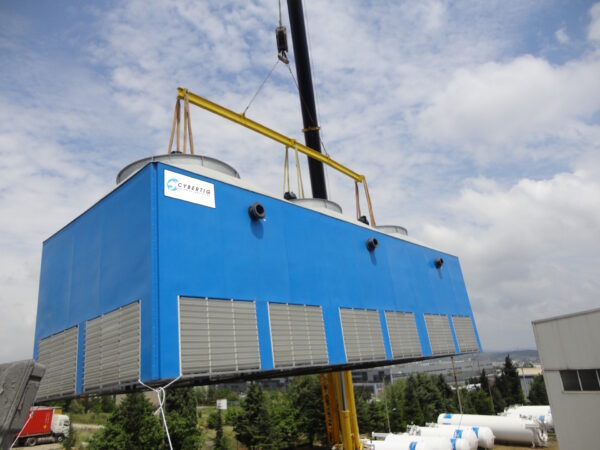
Cooling Tower Working Process
A cooling tower depends on water evaporation. Hot water, often from systems that clean flue gas, is exposed to air. As some of the water turns into vapor, it cools the rest of the water. This cooled water is then reused or released under safer conditions. This process helps the environment and keeps operations stable by managing heat levels.
This idea is based on heat transfer. When water goes from liquid to vapor, it takes in a lot of energy. The evaporated water carries this energy away. By using this in a controlled way, cooling towers keep big industrial systems working well while cutting down on waste.
Their role in Cleaning Flue Gas
Cleaning flue gas involves filtering and treating it with chemicals, which creates hot water or steam. If this water is not cooled correctly, it cannot be reused safely or well. A cooling tower lowers its temperature and pressure, which makes sure later processes work as they should. It also reduces wear and tear on equipment, making it last longer.
Also, usage cuts down on cooling tower water consumption. By reusing the same water after it has been cooled, industries avoid releasing a lot of hot water, which can harm the environment. This shows how well cooling works is closely tied to using water responsibly and following environmental rules.
Cooling Tower Details: A Summary
- Modern cooling towers can be changed to fit different needs. At Cybertig, the units we deal with often range from 100 kW to 10,000 kW in cooling power, serving industrial plants to power plants.
- Water flow rates usually range from 20 to 2000 m³/h, depending on the size of the operation.
- The water that comes in is usually between 35°C and 65°C, while the water that goes out is between 25°C and 45°C, showing how the tower lowers the heat.
- Wet bulb temperatures, which limit cooling, range from 15°C to 30°C, showing different weather conditions.
- Materials used include FRP (fiber-reinforced plastic), PVC, PP, or stainless steel, chosen based on what chemicals they can handle and how long they will last.
- Designs are either counterflow or crossflow, each with good things in terms of how well they work and how much space they take up.
These details show that towers can fit into different industrial settings, but to get the best performance, you need more than just the right parts. You need careful operation, regular cleaning, and close monitoring of water quality.
Why Cooling Tower Cleaning is Important
Over time, towers build up scale, algae, and chemical deposits that block heat transfer and airflow. Cleaning is not just a chore; it is something that must be done. Dirty surfaces reduce how well the tower works, use more energy, and speed up corrosion. For systems that clean flue gas, contaminants from gases can make things worse, so cooling tower cleaning is very important.
At Cybertig, we push for proactive steps, such as chemical treatment, adding biocides, and physical cleaning. By doing these things, the cooling surfaces stay clear, water flows better, and evaporation works best. If ignored, buildup can raise energy costs by up to 30% and cause pumps and heat exchangers to fail early.
How Much Water Cooling Towers Use
A big environmental factor with cooling towers is how much is the cooling tower water consumption. The process needs water to evaporate, bleed off, and drift (small droplets lost with air). Towers recycle most of the water, but evaporation is unavoidable. This makes water a key factor in planning for sustainability.
However, smart engineering can cut down on waste. Methods like filtration, good drift eliminators, and chemical conditioning help save water. Using reclaimed or treated wastewater can also lower the need for new water. At Cybertig, we adjust systems and plans to balance how well they work with saving water, making sure industries meet targets and environmental rules.
A Closer Look at How Cooling Towers Work
The cooling process can be divided into steps:
How Cooling Towers Start Exchanging Heat
The cooling happens first at the tower’s top. Hot water from some industrial job goes in through a distribution system. The water is usually hot, maybe around 35°C to 65°C, depending on the system. To cool things down well, the water can’t just drop. Instead, it shoots out of special nozzles, spraying water across the fill material.
The fill’s job is to make more surface area. By turning the water into thin sheets or drops, there’s more area for the hot water to touch the cooler air that comes in. More contact means better heat exchange. If the water isn’t spread well or the fill is bad, then airflow and fans don’t matter, and you won’t get the cooling you want.
Fills in today’s towers are made to cool as best they can. They use PVC or polypropylene, which can handle high temperatures, stop biological growth, and last through use. Engineers have to pick the right fills and nozzles to keep a balance between good work, water use, and upkeep.
Evaporation and Air Contact
When the hot water spreads over the fill, that’s when the next cooling tower stage starts: water meets air. This uses evaporative cooling. Air moves through the tower—upward in counterflow or sideways in crossflow—and touches the water.
The step uses interesting physics. As air passes, some water turns to vapor. Evaporation needs energy because molecules use heat to go from liquid to vapor. This energy comes from the remaining water, cooling it.
Each drop that evaporates takes away some heat, leaving cooler water. That’s why cooling towers work better than regular exchangers: they change the water’s phase, removing heat better than conduction or convection alone.
Airflow matters. Counterflow towers push air up against the falling water, leading to more contact and needing more fan power. Crossflow towers move air across the water. They use less energy and can be easier to care for. Both balance airflow, evaporation, and water flow with engineering.
Getting Rid of Heat
After air and water trade heat, there are two streams to deal with: cool water plus warm, wet air. The air, now carrying vapor and heat, goes out the tower’s top by fans in mechanical draft towers or by natural movement in natural draft models.
Fans are key in mechanical towers. They move the air and find the tower’s work, noise, and energy use. Bad fans or setup can hurt cooling, making the mechanism work harder and costing more.
The cooled water gathers in the basin at the tower’s bottom. With some heat gone, the water goes back to the industrial system. The temperature drop depends on air temperature, heat exchange in the fill, and how balanced the airflow and water distribution are.
The stage means more than just splitting cool water from warm air—it’s why towers exist. They control heat released into the air, which keeps the facility’s situation stable.
Re-Using in Industrial Ways
The cooled water at the bottom is pumped back into the plant’s jobs, like flue gas cleaning, condensers, or chemical scrubbers. It heats up again and goes through the cooling tower cycle.
The closed-loop makes cooling towers act efficiently and responsibly. By reusing water, facilities need less new water and send less hot waste into the environment. However, operators must watch the water’s chemistry. If they don’t treat and clean the water, junk grows, leading to scaling, corrosion, or biological buildup.
What looks like cooling and sending water back is actually a careful equilibrium. Operators have to keep rates, speeds, and chemical treatments at their best to keep the process safe and good.
Why Precision is Important
The cooling tower job might look easy, but precision matters at different stages. A bad nozzle kills the contact area. A blocked fill messes with evaporation. A bad fan cuts airflow, and bad water treatment grows bad stuff. Any of these could hurt the system, leading to higher costs, downtime, and plant hurt.
Today’s cooling towers use advanced monitoring and prediction tools. Sensors check basin temperature, air speed, moisture, and water chemistry in real time. Automated controls change fan speeds, dosing pumps, and distribution to keep levels right.
At Cybertig, we say that the cooling tower is not just extra gear. It’s the center of thermal management for any industrial thing. Knowing how its operation works helps achieve energy, compliance, and savings.
Counterflow vs. Crossflow Designs
The two designs—counterflow and crossflow—show how shape impacts performance.
In counterflow towers, air goes up against the water flow, which maximizes heat exchange but needs stronger fans. Crossflow towers let air move through the falling water. This design is smaller and uses less energy for some uses.
Picking the right design depends on the site, weather, maintenance, and cooling tower water consumption. Cybertig checks each site carefully, making sure the design fits the needs and sustainability goals.
Materials and How Long They Last
Picking materials is key to resisting corrosion, scale, and growth. Stainless steel is strong and resists chemicals, but costs more. FRP is light and resists corrosion, making it good for many settings. PVC and PP are used in fill material because they are cheap and resist water changes.
How long something lasts is not just about material—it is about maintenance. Regular cooling tower cleaning extends life by reducing wear, while water treatment controls scale and corrosion. A maintained tower can last a long time, giving back consistent money.
Environment and Energy Points
Industries today need more than just working equipment. Towers must meet standards. Reducing water use lowers costs and fits with saving resources.
Energy is also important. Towers consume more fan power, need higher pumping energy, and lower performance. Systems, drives, and maintenance let towers run well with less impact.
Working with Smart Systems
The industry has changed how cooling towers are managed. Modern systems use sensors to watch temperature, flow, and water chemistry in real time. This allows changes in chemical use, fan speeds, and cooling tower cleaning schedules.
This lowers downtime, cuts costs, and gives data for planning. At Cybertig, we help clients use these techs to stay ahead in performance and rules.
Safety in Cooling Tower Work
Beyond well well-working state, safety is most important. Towers can hold bacteria if the water chemistry is bad. Disinfection, good design, and monitoring lower these risks. The work needs to follow safety rules, making sure people do maintenance without danger.
At Cybertig, safety is part of every step, making sure things work without hurting people or the environment.
Why Pick Cybertig?
Cooling towers might seem like extra equipment, but they are key to performance. By making sure things work, lowering water use, and providing cooling tower cleaning, Cybertig gives knowledge. We focus on the tower and the maintenance and monitoring around it.
Industries face pressure to balance making things with sustainability. With Cybertig, this balance can be reached. Our team combines science, engineering, and experience to ensure every tower works best, longer, with less impact.
Specifications
- Cooling capacity 100 to 10000 kW
- Water flow rate 20 to 2000 m3/h
- Inlet temperature 35 to 65°C
- Outlet temperature 25 to 45°C
- Wet bulb temperature 15 to 30°C
- Material FRP, PVC, PP or stainless steel
- Type Counterflow or crossflow
Start your technical evaluation
Let’s assess your needs, analyse your current proccesses and see how Cybertig can implement the change that your organisation requires. We’re here to help.